

Zeus Wallet Shuts Down Infrastructure After Cybersecurity Breach, Customer Funds Secure
Self-custodial Bitcoin Lightning wallet takes systems offline for security audit; founder confirms no user losses or Lightning Network vulnerabilities discovered

By Jane Doe
Published on Aug 6, 2026
 Cryptorah
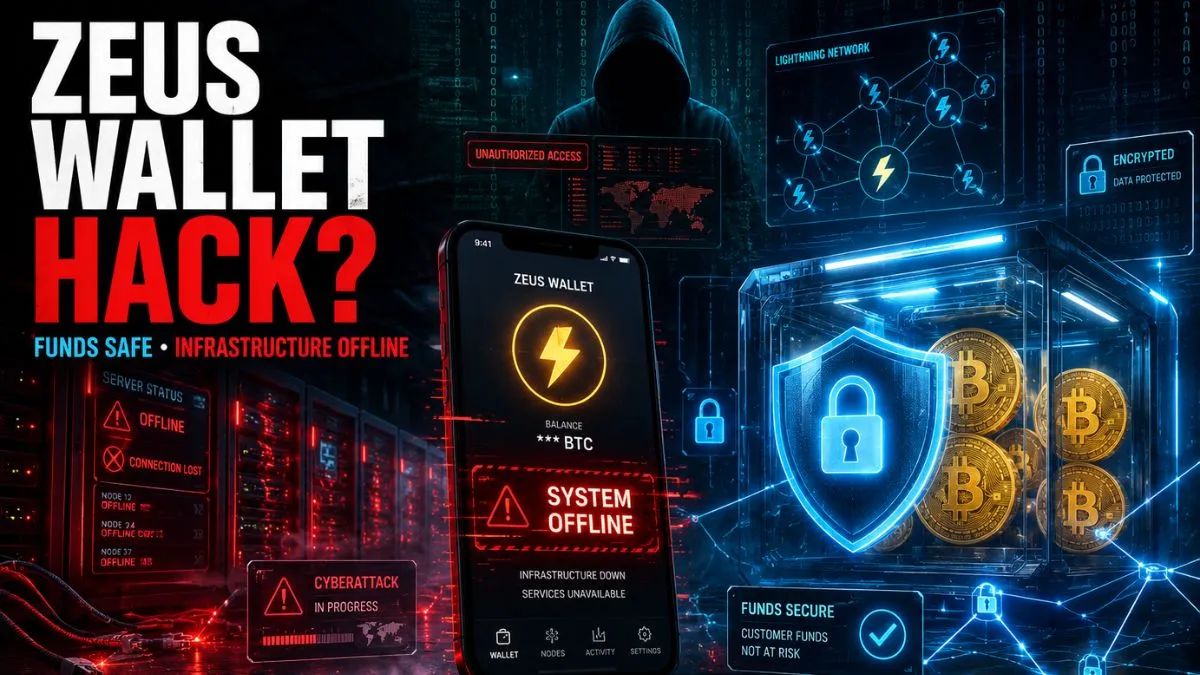
Quick Take
- Zeus Wallet disabled all infrastructure Wednesday following a cybersecurity incident
- Founder Evan Kaloudis stated no customer funds were compromised and the Lightning Network itself was not affected
- Attack was mitigated within hours and limited to Zeus-specific infrastructure
- Users whose Lightning Service Provider channels closed during the incident will receive replacement channels once services resume
What Happened
Zeus Wallet, a self-custodial Bitcoin Lightning Network wallet provider, took its entire infrastructure offline Wednesday after detecting a cybersecurity incident. The company announced the shutdown via X (formerly Twitter), emphasizing that customer funds remained secure throughout the breach.
Founder Evan Kaloudis published a detailed blog post outlining the company's initial findings. According to Kaloudis, the attack was successfully contained within hours of detection, and the investigation found no evidence that the underlying Lightning node software—the core technology powering the Lightning Network—was compromised.
"Based on our investigation so far, we believe this incident was limited to Zeus infrastructure," Kaloudis stated, drawing a critical distinction between the company's proprietary systems and the broader Lightning Network protocol.
The shutdown comes just two days after Zeus announced it would disable swap functionality following Boltz's decision to halt operations indefinitely. Boltz, a non-custodial Bitcoin swap service that Zeus had integrated, suspended its platform citing unspecified concerns, with no timeline provided for restoration.
What is a self-custodial wallet?
A self-custodial wallet means users maintain complete control over their private keys and funds, rather than entrusting them to a centralized exchange or service provider. This architecture theoretically makes user funds independent of the wallet provider's infrastructure security—though wallet software vulnerabilities can still pose risks.
Why It Matters
Key Industry Implications
This incident highlights the distinction between infrastructure security and protocol security in the Lightning Network ecosystem. While Zeus's systems were breached, the underlying Lightning Network remained unaffected—demonstrating both the resilience of decentralized protocols and the ongoing vulnerability of the service layers built atop them.
The timing of this breach is particularly notable given Zeus's recent decision to disable swaps after Boltz's shutdown. The Lightning Network wallet space has faced mounting operational challenges in recent months, with infrastructure providers struggling to balance security, reliability, and feature offerings.
For users of self-custodial wallets, the incident reinforces an important reality: while "not your keys, not your coins" protects against exchange collapses, infrastructure attacks can still disrupt access to Lightning channels and services—even when the underlying funds remain technically secure.
Zeus's transparency in immediately disclosing the incident and providing preliminary findings contrasts with the more opaque communication from other recent cryptocurrency security events. This approach may set a new standard for how Lightning wallet providers handle and communicate security incidents.
The Numbers
Zeus committed to replacing all Lightning Service Provider channels that were force-closed during the incident. LSP channels are a critical component of Lightning wallet functionality, allowing users to receive payments even when their own node is offline.
Data sourcing note
All figures reported here are derived directly from Zeus Wallet's official announcements and founder Evan Kaloudis's blog post. No independent verification of these claims has been completed, and Zeus did not disclose the specific nature of the attack or technical details about the breach vector.
What's Next
Zeus is conducting a comprehensive security audit of its systems before restoring infrastructure. The company provided no specific timeline for when services will resume, stating only that operations remain suspended pending completion of the audit.
According to Kaloudis, the incident has reinforced Zeus's existing development priorities around trusted execution environments (also known as enclaves) and the Validating Lightning Signer (VLS) project. These technologies aim to strengthen infrastructure security by isolating sensitive operations and adding additional validation layers to Lightning transactions.
Things to Watch
- Service restoration timeline: Zeus has not committed to a specific date for bringing infrastructure back online
- Detailed incident report: Whether Zeus will publish a full post-mortem disclosing the attack vector and technical details
- Regulatory response: If any financial regulators will investigate the incident given Zeus's role as a financial service provider
- Boltz status: Whether the Boltz platform shutdown is connected to broader security concerns in the Lightning swap ecosystem
- User migration: Whether Zeus users will shift to alternative Lightning wallets during the extended downtime
Frequently Asked Questions
Are my Bitcoin safe if I use Zeus Wallet?
According to Zeus founder Evan Kaloudis, no customer funds were compromised in this incident. Because Zeus is a self-custodial wallet, users maintain control of their private keys, meaning funds are technically secure even if Zeus infrastructure is offline. However, you may not be able to access Lightning Network functionality until services resume.
Was the Lightning Network itself hacked?
No. Zeus stated it found no evidence that Lightning node software or the broader Lightning Network protocol was affected. The company emphasized the incident was "limited to Zeus infrastructure"—meaning the attack targeted Zeus's specific systems rather than the underlying network.
What happens to my Lightning channels during this outage?
Some Lightning Service Provider channels were force-closed during the incident. Zeus has committed to providing replacement channels to affected users once infrastructure is restored. If you had active channels, you should monitor Zeus's official communications for instructions on channel restoration.
When will Zeus Wallet services be restored?
Zeus has not provided a specific timeline. The company is conducting a full security audit before restoring operations and stated services will remain offline until that process is complete.
Should I move my funds to a different wallet?
That decision depends on your individual risk tolerance and needs. Your on-chain Bitcoin remains accessible even during the infrastructure outage if you control your private keys. However, Lightning Network functionality is currently unavailable. If you need active Lightning channels, you may want to consider alternative wallet providers during this downtime.
Source
This report is based exclusively on information provided in the original news article, which cited Zeus Wallet's X announcement and founder Evan Kaloudis's blog post. Cointelegraph noted they requested additional details from Zeus but had not received a response by publication time.
Investment disclaimer: The content reflects the author’s personal views and current market conditions. Please conduct your own research before investing in cryptocurrencies, as neither the author nor the publication is responsible for any financial losses.
Ad Disclosure: This site may feature sponsored content and affiliate links. All advertisements are clearly labeled, and ad partners have no influence over our editorial content.

Related Articles
XRP Price Prediction: AI Models See $4-$8 Target as Legal Overhang Lifts
ChatGPT AI predicts XRP could reach $4-$8 by end of 2026 as SEC lawsuit closure removes legal overhang, but current price at $1.02 suggests the harder test lies ahead.

Fireplace Is Extinguished: Prediction Market Terminal Shuts Down 195 Days After Launch
Prediction markets terminal Fireplace is shutting down 195 days after launch, giving users until Sept 30 to withdraw funds — even after raising $1.5M and building for Polymarket and Kalshi.

CLARITY Act Push, Another Strategy Bitcoin Sale, and a Warning About Invisible Quantum Attacks
A recap of today's crypto news: the White House's push to pass the CLARITY Act by September, Strategy's latest Bitcoin sale to fund a stock buyback, and a warning about undetectable quantum-computing attacks on crypto wallets.

Standard Chartered: LINK Could Climb 25x to $200 if Tokenized Assets Hit $4T by 2028
Standard Chartered forecasts LINK could rise 25-fold to $200 by 2030 as tokenized real-world assets scale to $4 trillion, citing Chainlink's dominant oracle market position.