

Aave Governance Weighs Pruning Six Blockchains and 50 Idle Markets in Risk-Framework Cleanup
A new proposal would wind down V3 lending markets on Sonic, Scroll, zkSync, Metis, Soneium and Aptos, and retire dozens of thinly used reserves — the first broad test of Aave's freshly adopted risk rules.

By Jane Doe
Published on Jul 31, 2026
 Cryptorah
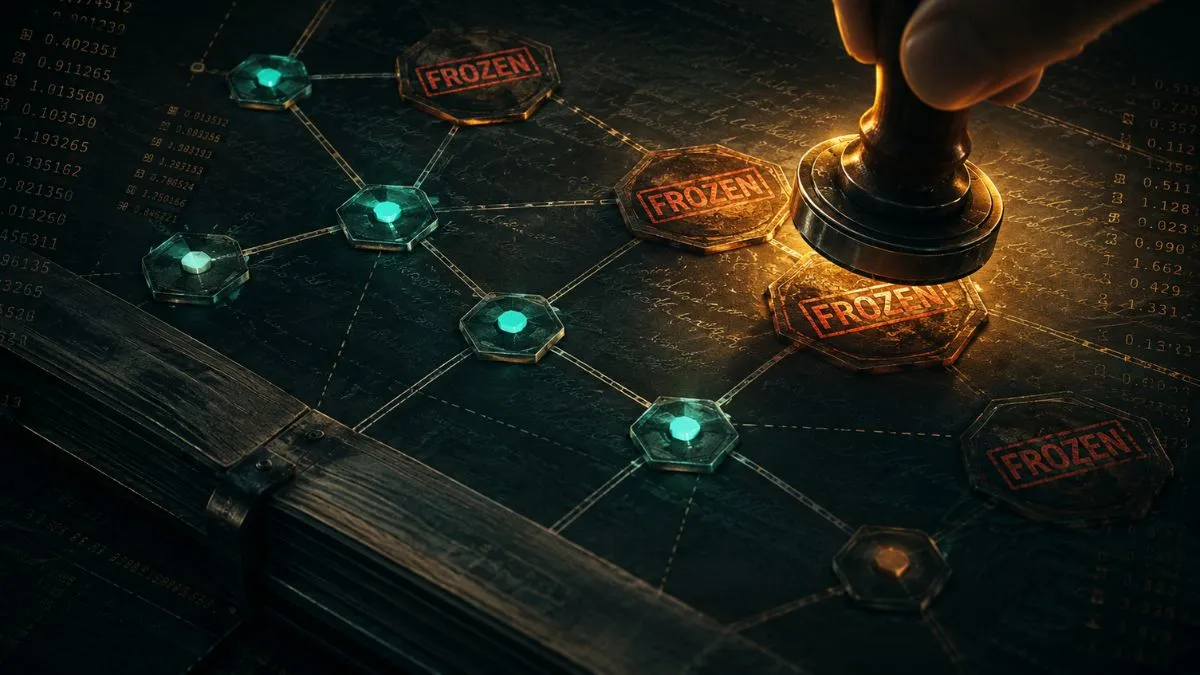
- An Aave risk-management proposal (ARFC) would wind down V3 markets on six chains and retire 50 low-use reserves plus 21 matured Pendle principal tokens across 11 deployments.
- The affected reserves held $98.1M in supplied assets and $15.6M in debt as of July 28.
- Scroll, zkSync, Metis and Soneium are already fully frozen; Sonic and Aptos are still active and are now recommended for freezing too.
- ⚠️ This is a proposal stage (ARFC), not a finished onchain vote — none of it is executed yet.
What Happened
Risk-management provider LlamaRisk, working alongside other Aave service providers, put forward a cleanup proposal that touches nearly a dozen Aave deployments at once. The recommendation: retire 50 reserves that see little use, close out 21 Pendle principal token listings that have already matured, and fully exit six blockchains — Sonic, Scroll, zkSync, Metis, Soneium and Aptos. Combined, the reserves in scope held $98.1 million in supplied assets and $15.6 million in outstanding debt, based on balances checked on July 28.
Aptos stands out in the proposal. Aave's V3 market there is only about 11 months old, yet LlamaRisk found available liquidity had fallen 94% over six months while quarterly revenue sat below $1,000 — numbers weak enough that the newest deployment on the list is also one of the first recommended for a full freeze.
Most of the other five chains are already partway there: every reserve on Scroll, zkSync, Metis and Soneium has already been frozen. Only Sonic and Aptos are still active, and both are now recommended for freezing as the next step toward full exit.
This didn't start with this proposal. A temperature-check vote that closed on December 5, 2025 set the direction — 923,400 votes in favor versus under 1% opposed — for raising reserve factors on underperforming instances, shutting down zkSync, Metis and Soneium, and requiring any new chain deployment to clear a $2 million annual revenue floor. Scroll was folded in afterward: in April, LlamaRisk used an accelerated direct-to-AIP process to freeze all of its reserves and raise reserve factors, calling it the completion of Scroll's deprecation after network liquidity and Aave activity there deteriorated quickly.
The common thread linking all of it is a formal risk framework Aave published on June 9, covering asset, bridge, monitoring and chain risk along with explicit criteria for when a reserve or an entire deployment should be wound down. This month's proposal is effectively that framework being put into practice.
Background: ARFC vs. frozen vs. wound down
An ARFC (Aave Request for Comment) is a detailed proposal stage that precedes a formal Aave Improvement Proposal (AIP) — it signals intent and gathers feedback but is not proof that a final onchain vote has happened or been executed. Freezing a reserve stops new supply and borrowing against it while letting existing positions be managed down. Winding down or exiting a deployment goes further, aiming to close out a chain's markets entirely once balances are low enough.
Why It Matters
Aave built its recent growth on being available almost everywhere — but this proposal shows governance now applying a formal filter rather than expanding indefinitely. The $2 million annual revenue floor set in December turns "is this chain worth supporting" into a measurable bar new deployments have to clear before launch, not just a judgment call after the fact.
Founder Stani Kulechov framed the cleanup as reducing "Aave's economic and technical risk surface as part of the new Aave Risk Framework and Technical Asset Listing Framework," and was explicit that it isn't a retreat: "Aave will continue applying continuous risk assessment for all assets across all deployments," he said, describing it instead as a strategic refocusing. That framing lines up with timing — Aave expanded to Avalanche earlier this month even as it moves to exit six other chains, and a related headline referenced in the source material notes Aave also brought V3 lending and its GHO stablecoin to Monad. ⚠️ The source material doesn't provide further detail on the Monad or Avalanche deployments beyond these references, so we can't independently verify their current scale here.
The Numbers
Chain status ledger
Methodology & sourcing notes
All figures above — the $98.1M/$15.6M totals, the 50 reserves and 21 Pendle PT listings across 11 deployments, the Aptos liquidity and revenue figures, and the December vote tallies — are drawn directly from LlamaRisk's recommendation and the Aave governance record as described in the source article. Balances were measured on July 28. No independent onchain verification was performed for this report.
Market Reaction
The source material contains no token price data, trading volume, or broader market sentiment tied to this proposal, so this section can't speak to price action without speculating. The one measurable "reaction" available is governance turnout: the December 5, 2025 temperature check that set this cleanup in motion passed with 923,400 votes in favor and under 1% opposed, suggesting broad community support for tightening standards across underperforming deployments.
What's Next / Things to Watch
As an ARFC, this proposal still needs to advance to a formal Aave Improvement Proposal and pass an onchain vote before any of the six chains are actually wound down. Worth watching from here: whether Sonic and Aptos reserves get frozen as recommended, how quickly the remaining four already-frozen chains move toward full exit, and whether the $2 million annual revenue floor changes which chains Aave is willing to launch on next. Kulechov's comments suggest the pruning runs in parallel with continued expansion rather than replacing it, pointing to the recent Avalanche launch as an example of that dual track.
FAQs
What exactly is Aave proposing to do?
Wind down its V3 lending markets on six blockchains — Sonic, Scroll, zkSync, Metis, Soneium and Aptos — and retire 50 low-use reserves plus 21 matured Pendle principal token listings across 11 deployments in total.
Why is Aave exiting Aptos so soon after launching there?
LlamaRisk found the Aptos V3 market, live for roughly 11 months, had seen available liquidity drop 94% over six months with quarterly revenue under $1,000 — activity too thin to justify keeping it open under Aave's current risk framework.
What's the difference between this proposal and a final decision?
This is an ARFC, a detailed proposal stage that precedes a formal Aave Improvement Proposal (AIP). It is not itself proof of a completed onchain vote or execution — those steps still have to happen.
Has any of this already taken effect?
Partly. Every reserve on Scroll, zkSync, Metis and Soneium is already frozen from earlier governance actions. Sonic and Aptos remain active for now and are newly recommended for freezing under this proposal.
Does this mean Aave is stepping back from multichain expansion?
According to founder Stani Kulechov, no — he described it as a strategic refocusing rather than a reversal, noting Aave will keep applying continuous risk assessment across all deployments, and pointing to this month's Avalanche launch as evidence expansion is continuing alongside the cleanup.
Endnotes
- Source article credits founder Stani Kulechov as the source of an accompanying image; no other external URLs were included in the provided source material to link here.
- Related coverage referenced by headline only in the source material: "Aave positioned to capture tokenized asset growth in DeFi: Standard Chartered," "Aave brings V3 lending and GHO stablecoin to Monad," and a Cointelegraph Magazine piece on why DeFi projects that survived the 2022 crash are shutting down now. ⚠️ No links or further detail on these were provided.
Investment disclaimer: The content reflects the author’s personal views and current market conditions. Please conduct your own research before investing in cryptocurrencies, as neither the author nor the publication is responsible for any financial losses.
Ad Disclosure: This site may feature sponsored content and affiliate links. All advertisements are clearly labeled, and ad partners have no influence over our editorial content.

Related Articles
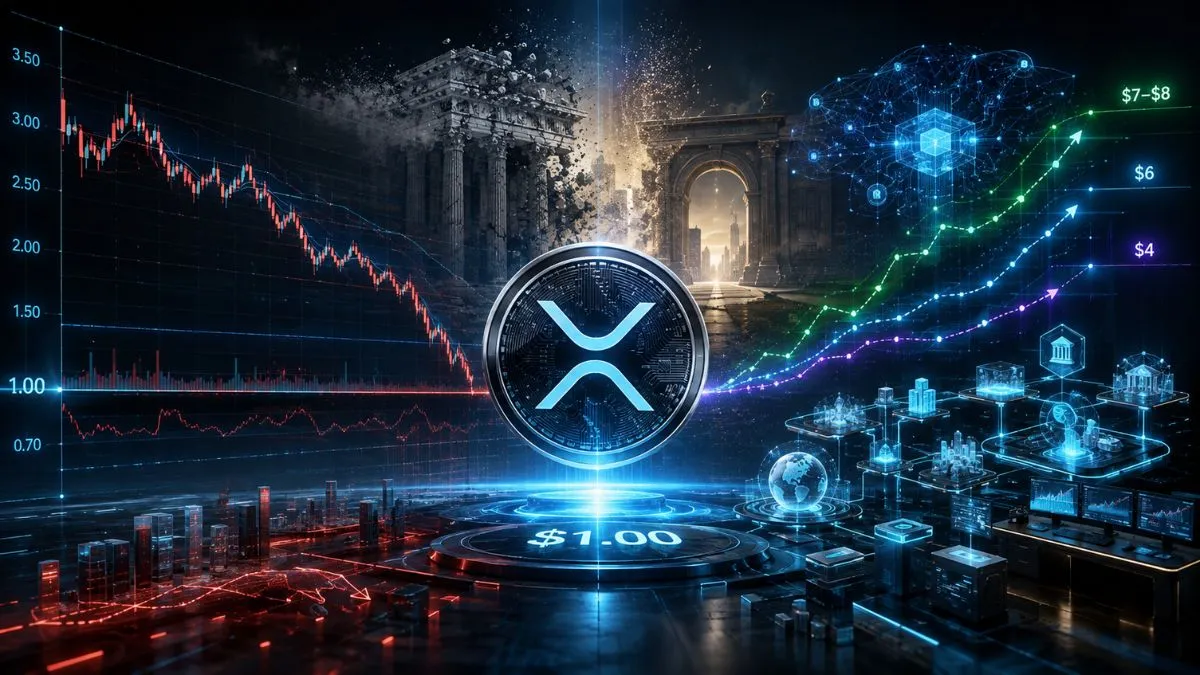
XRP Price Prediction: AI Models See $4-$8 Target as Legal Overhang Lifts
ChatGPT AI predicts XRP could reach $4-$8 by end of 2026 as SEC lawsuit closure removes legal overhang, but current price at $1.02 suggests the harder test lies ahead.

Fireplace Is Extinguished: Prediction Market Terminal Shuts Down 195 Days After Launch
Prediction markets terminal Fireplace is shutting down 195 days after launch, giving users until Sept 30 to withdraw funds — even after raising $1.5M and building for Polymarket and Kalshi.

CLARITY Act Push, Another Strategy Bitcoin Sale, and a Warning About Invisible Quantum Attacks
A recap of today's crypto news: the White House's push to pass the CLARITY Act by September, Strategy's latest Bitcoin sale to fund a stock buyback, and a warning about undetectable quantum-computing attacks on crypto wallets.

Standard Chartered: LINK Could Climb 25x to $200 if Tokenized Assets Hit $4T by 2028
Standard Chartered forecasts LINK could rise 25-fold to $200 by 2030 as tokenized real-world assets scale to $4 trillion, citing Chainlink's dominant oracle market position.