

Washington Moves to Cut Chinese Optical Transceivers Out of AI Data Centers
A reported FCC plan would block new imports of the fiber-optic parts that shuttle data between AI chips — the latest front in the US-China race over who controls AI infrastructure.

By Jane Doe
Published on Aug 4, 2026
 Cryptorah
Quick Take
- The White House is reportedly drafting rules to bar US imports of new Chinese-made optical transceivers, the components that link AI chips inside data centers, per Reuters.
- The FCC is developing the restrictions and is expected to announce them later this year, according to the report.
- US officials are said to be concerned the parts could be used for data theft, malware, or sabotage inside data centers running major AI models.
- The move echoes the costly "rip and replace" fallout from Huawei equipment embedded in US networks — and Beijing is warning it will respond.
What Happened
The White House is reportedly preparing new restrictions on Chinese-made data center hardware as part of a broader push to lock down the physical infrastructure behind US AI development. According to a Reuters report cited in this story, the rules under discussion would stop new models of Chinese optical transceivers from being imported into the United States for use in AI data centers.
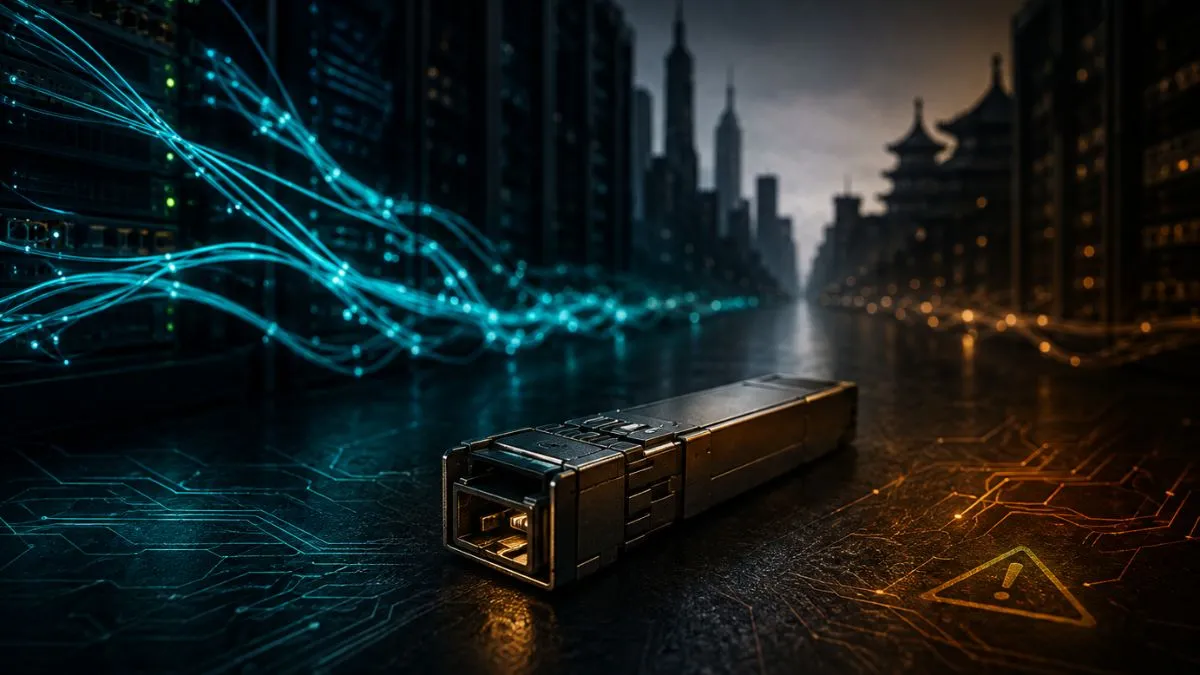
Optical transceivers convert electrical signals into light and back again, moving data through fiber-optic cabling at very high speed. Inside a modern AI data center, they're part of what physically links banks of AI chips together so those chips can work in concert on a single training or inference job.
The Federal Communications Commission is the agency reportedly drafting the proposal, and the report indicates an announcement is expected later this year. If the rule is adopted, it would apply to future imports of new transceiver models rather than, as described, existing installed equipment.
Why It Matters
Why It Matters
AI data centers are the physical chokepoint of the AI race: whoever controls what's inside them has leverage over how fast models get trained and how secure that process is. Optical transceivers are unglamorous but structurally important — the report frames them as a potential entry point for espionage or sabotage precisely because they sit deep inside the network fabric connecting AI chips, not at the edge where security teams typically focus.
The policy rationale, per the report, centers on preventing a repeat of the situation with Huawei telecom equipment, which became so thoroughly embedded in US networks that removing it later proved expensive and slow. Restricting new Chinese transceiver imports now, before AI data center buildouts scale further, would in theory avoid a similar entanglement.
Divyansh Kaushik, an AI policy expert at the advisory firm Beacon Global Strategies, was quoted arguing that these components carry genuine risk and that AI developers need supply-chain security built in from the start rather than retrofitted later.
"Transceivers definitely pose a risk," and AI developers "want to make sure the data center supply chain is secure from the get-go."— Divyansh Kaushik, Beacon Global Strategies
The Numbers
Market Reaction
The report does not include stock prices, crypto prices, or any market-data figures tied to this specific news. What it does include is official reaction: the White House and the FCC did not respond to Reuters' requests for comment. The Chinese embassy in Washington did respond, calling on the US to listen to "the objective and rational voices of the business communities in both countries" and to stop "smearing Chinese companies and threatening them with sanctions." Chinese officials additionally said Beijing would "take all necessary measures" in response to whatever the US ultimately does.
What's Next / Things to Watch
Based strictly on what the report lays out, three things are worth tracking: whether the FCC formally publishes the proposed rule this year as expected; whether the final scope stays limited to "new models" of transceivers or expands further; and whether Beijing's promised response takes the form of matching import restrictions, sanctions on US firms, or something else entirely — none of which has been specified yet.
Background: why optical transceivers matter in AI infrastructure
Transceivers are a basic building block of any high-speed network, not something unique to AI. What's changed is the density and speed AI data centers demand: training large models requires huge numbers of chips to exchange data continuously, which has made the fiber-optic links — and the transceivers powering them — a bigger part of the overall system than in a typical enterprise data center. That's the backdrop the report uses to explain why a component this small has become a policy focus.
Sourcing notes
This article is based on a single news item that itself cites Reuters reporting and a statement from the Chinese embassy in Washington. No original Reuters article URL was provided in the source material, so no direct link is included below. All figures, quotes, and claims are limited to what appears in that source; nothing has been supplemented from outside data.
FAQs
What exactly would be banned?
New models of Chinese-made optical transceivers imported into the US for use in AI data centers, according to the reported FCC proposal.
Who is writing the rule?
The Federal Communications Commission, per the report, with an announcement expected later this year.
Why are transceivers considered a security risk?
Officials cited in the report worry they could be used to steal data, install malicious software, or disrupt operations inside AI data centers.
Has China responded?
Yes — the Chinese embassy in Washington criticized the move and officials said China would "take all necessary measures" in response, without specifying what those would be.
Is this related to the Huawei ban?
The report frames it as a lesson learned from Huawei: US officials reportedly want to avoid Chinese hardware becoming embedded in critical infrastructure the way Huawei equipment did, which was costly and slow to remove later.
Sourcing
- Reporting attributed to Reuters within the supplied source article. No direct URL was included in the source material for this article.
Investment disclaimer: The content reflects the author’s personal views and current market conditions. Please conduct your own research before investing in cryptocurrencies, as neither the author nor the publication is responsible for any financial losses.
Ad Disclosure: This site may feature sponsored content and affiliate links. All advertisements are clearly labeled, and ad partners have no influence over our editorial content.

Related Articles

XRP Price Prediction: AI Models See $4-$8 Target as Legal Overhang Lifts
ChatGPT AI predicts XRP could reach $4-$8 by end of 2026 as SEC lawsuit closure removes legal overhang, but current price at $1.02 suggests the harder test lies ahead.

Fireplace Is Extinguished: Prediction Market Terminal Shuts Down 195 Days After Launch
Prediction markets terminal Fireplace is shutting down 195 days after launch, giving users until Sept 30 to withdraw funds — even after raising $1.5M and building for Polymarket and Kalshi.

CLARITY Act Push, Another Strategy Bitcoin Sale, and a Warning About Invisible Quantum Attacks
A recap of today's crypto news: the White House's push to pass the CLARITY Act by September, Strategy's latest Bitcoin sale to fund a stock buyback, and a warning about undetectable quantum-computing attacks on crypto wallets.

Standard Chartered: LINK Could Climb 25x to $200 if Tokenized Assets Hit $4T by 2028
Standard Chartered forecasts LINK could rise 25-fold to $200 by 2030 as tokenized real-world assets scale to $4 trillion, citing Chainlink's dominant oracle market position.