

Binance Wallet's $50,000 NES Perpetuals Competition: How Privacy-Focused AI Traders Can Compete
A ten-day trading event puts Nesa's native token in the spotlight with leverage, early-bird multipliers, and a shared reward pool for qualifying participants.

By Jane Doe
Published on Jul 29, 2026
 Cryptorah
Quick Take
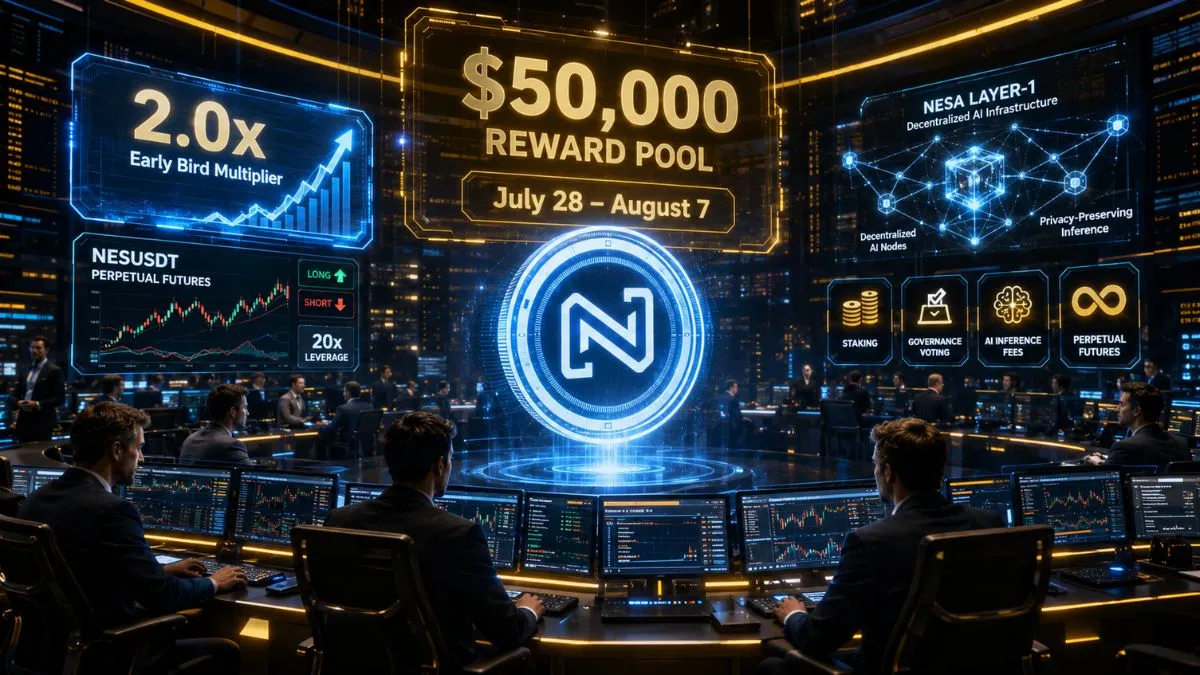
- Binance Wallet runs a NES perpetuals trading contest from July 28 through August 7, 2026, with $50,000 in total prizes.
- Traders must execute at least 1,000 USDT in NESUSDT perpetual volume to qualify for a share of the pool.
- NES is the native token of Nesa, a Layer-1 blockchain designed for decentralized, privacy-preserving AI inference.
- Day 1 participants receive a 2.0x multiplier on trading volume, incentivizing early registration.
What Happened
Binance Wallet announced a perpetuals trading competition centered on NESUSDT, the perpetual futures pair for Nesa's native token. The event window opens July 28, 2026, at 13:00 UTC and runs for ten days, closing August 7 at the same time. Participants compete for a share of a $50,000 reward pool by trading perpetual contracts—either long or short positions—on the NES token.
To qualify, traders must meet a minimum cumulative trading volume of 1,000 USDT across the event period. The competition includes an early-bird incentive: traders who register and execute volume on Day 1 (July 28) receive a 2.0x multiplier applied to their trading activity, which can amplify their share of the final prize distribution.
The contest is hosted within Binance Wallet's mobile application, not on Binance's main exchange interface. Registration requires users to locate the event page inside the Wallet section and click "Join" before trading begins.
Understanding Nesa and the NES Token
What Nesa Does
Nesa operates as a Layer-1 blockchain purpose-built for decentralized artificial intelligence inference. The core proposition is privacy preservation: instead of routing AI model queries through a single centralized server, Nesa distributes inference tasks across a network of independent compute nodes. Each node processes requests without a central party observing the input or output, and the results are cryptographically verified throughout the workflow.
This architecture targets use cases where model users want to keep queries confidential—sensitive medical data analysis, proprietary business intelligence, or personal AI assistants that don't leak user behavior to a platform operator.
The NES Token's Role
NES serves three functions inside the Nesa ecosystem:
- Inference query fees: Users pay NES to submit AI inference requests to the network.
- Node operator staking: Compute providers lock NES as collateral to participate in the network and earn fee revenue.
- Governance: Token holders vote on protocol upgrades, fee structures, and parameter changes.
Nesa's mainnet launched May 9, 2026. The token has a hard cap of 1 billion units. Binance Alpha, the exchange's platform for early-stage token listings, added NES on June 24, 2026, alongside a Wallet booster campaign to drive adoption.
Technical Background: How Nesa Differs from Cloud AI
Traditional cloud AI inference (OpenAI API, Google Vertex AI) routes every query through a single provider's infrastructure. That provider can log prompts, responses, and metadata. Nesa replaces this with a peer-to-peer model: queries are split into encrypted shards, distributed to multiple nodes, computed in isolation, and reassembled with zero-knowledge proofs verifying the output matches the requested model. No single node sees the full query or result, and the blockchain's consensus layer ensures nodes can't collude without detection.
How to Enter the Competition
- Open the Binance mobile app and navigate to the Binance Wallet section.
- Locate the NES Perpetuals Trading Competition event page within the Wallet interface.
- Click "Join" to register for the event. Registration must be completed before trading activity counts toward the competition.
- Trade NESUSDT perpetual contracts. You can open either long (betting on price increase) or short (betting on price decrease) positions.
- Accumulate at least 1,000 USDT in total trading volume across the ten-day period to qualify for a prize share.
- If possible, trade on Day 1 (July 28) to capture the 2.0x early-bird multiplier, which doubles the effective volume applied to your competition standing.
The Numbers: Prize Pool and Key Dates
Competition Timeline
| Metric | Value |
|---|---|
| Prize Pool | $50,000 (shared among qualifiers) |
| Minimum Volume | 1,000 USDT cumulative |
| Trading Pair | NESUSDT Perpetual |
| Position Types | Long or Short |
| Day 1 Multiplier | 2.0x (July 28 only) |
| NES Hard Cap | 1 billion tokens |
| Mainnet Launch | May 9, 2026 |
| Binance Alpha Listing | June 24, 2026 |
Methodology Note: How Prize Shares Are Calculated
The announcement does not specify the exact distribution formula. Typically, perpetuals trading competitions on Binance allocate prizes based on proportional trading volume among qualifiers: your share = (your volume / total qualifying volume) × prize pool. The 2.0x Day 1 multiplier means early traders' volumes are doubled before entering the pool calculation. However, participants should review the official event page for the precise allocation method, as variations exist (tiered brackets, winner-takes-all top slots, or hybrid models).
Why It Matters
This competition sits at the intersection of three trends: exchange platforms pushing wallet-native trading features, the rise of privacy-focused blockchain infrastructure, and the growing liquidity requirements for AI-related tokens.
Binance Wallet as a trading venue: By hosting perpetuals directly inside its mobile wallet rather than the main exchange, Binance is testing a streamlined UX for retail traders who want leverage without leaving the wallet interface. Success here could shift more derivatives volume off the main platform and into wallet-embedded products, which carry different regulatory and custody implications.
Privacy-preserving AI infrastructure: Nesa's mainnet launched only two months ago (May 9, 2026), and its Binance Alpha listing arrived June 24. A $50,000 trading incentive two months post-launch signals that Binance sees potential in decentralized AI inference as a category, not just NES as a single token. If Nesa's node network grows and inference volumes rise, NES could serve as a liquidity test case for other privacy-AI projects entering exchange listings in late 2026.
Leverage and early-stage tokens: Perpetuals trading on a two-month-old token introduces elevated volatility risk. The 2.0x Day 1 multiplier is designed to concentrate liquidity at the start of the event, which helps establish a price discovery baseline but can also amplify intraday swings if large positions pile in early.
What's Next
During the Competition (July 28–August 7)
- Volume concentration: Expect the highest trading activity on Day 1 due to the 2.0x multiplier, followed by a second wave in the final 48 hours as traders close positions or push over the 1,000 USDT minimum threshold.
- Price volatility: NESUSDT perpetuals may see wider-than-normal bid-ask spreads and larger intraday ranges as participants open leveraged positions to maximize volume rather than directional conviction.
- Wallet adoption metrics: Binance will likely track new Wallet registrations and compare engagement rates against prior wallet-based competitions to assess whether perpetuals trading inside a mobile wallet resonates with retail users.
After the Event
- Prize distribution timing: The announcement does not specify when rewards will be credited. Participants should monitor the official event page for post-competition updates.
- Nesa network growth: Watch for node operator count and inference request volume on Nesa's mainnet. If the competition drives NES price or staking activity upward, it may accelerate compute provider onboarding.
- Binance Wallet roadmap: If this contest generates significant participation, Binance may expand perpetuals offerings to other wallet-listed tokens or introduce additional trading incentives (fee rebates, maker rewards) within the Wallet environment.
Frequently Asked Questions
Do I need to hold NES tokens to participate, or can I trade with USDT only?
You trade NESUSDT perpetual contracts, which are settled in USDT. You do not need to hold NES tokens in your wallet to participate. The competition measures your cumulative trading volume in USDT terms across long and short positions.
How is the $50,000 prize pool divided among participants?
The announcement does not specify the exact allocation method. Binance perpetuals competitions typically distribute prizes proportionally based on each participant's share of total qualifying volume, but some use tiered brackets or leaderboard rankings. Check the official event page for the precise formula.
What happens if I trade on Day 1 and then again later—do I get the 2.0x multiplier on all my volume?
The 2.0x multiplier applies only to trading activity executed on Day 1 (July 28, 2026). Any volume you generate on subsequent days counts at 1.0x. The multiplier is a one-time early-bird bonus, not a permanent boost for early registrants.
Is this competition available on Binance.com, or only in Binance Wallet?
The event is hosted exclusively within the Binance Wallet mobile application. You must navigate to the Wallet section of the Binance app, locate the NES Perpetuals Trading Competition event page, and register there. It is not accessible through the main Binance exchange web interface or Binance Futures trading terminal.
What are the main risks of trading perpetuals on a newly launched token like NES?
Perpetual futures use leverage, which magnifies both gains and losses. NES is a two-month-old token (mainnet May 9, 2026) with relatively low market maturity compared to established assets. This can lead to higher volatility, wider spreads, lower liquidity depth, and increased likelihood of cascading liquidations during sharp price moves. The competition structure incentivizes high volume, which may encourage participants to use leverage they would not otherwise employ. Only trade capital you can afford to lose, and review Binance's perpetuals trading guidelines before participating.
Source
All factual claims, dates, figures, and quotes in this article are derived from the supplied news content titled "Binance Wallet Launches NES Perpetuals Trading Competition With $50,000 in Rewards." No external data sources, price feeds, or real-time market information were used. Participants should consult Binance's official event page for complete terms, conditions, and any updates not reflected in the original announcement.
Investment disclaimer: The content reflects the author’s personal views and current market conditions. Please conduct your own research before investing in cryptocurrencies, as neither the author nor the publication is responsible for any financial losses.
Ad Disclosure: This site may feature sponsored content and affiliate links. All advertisements are clearly labeled, and ad partners have no influence over our editorial content.

Related Articles
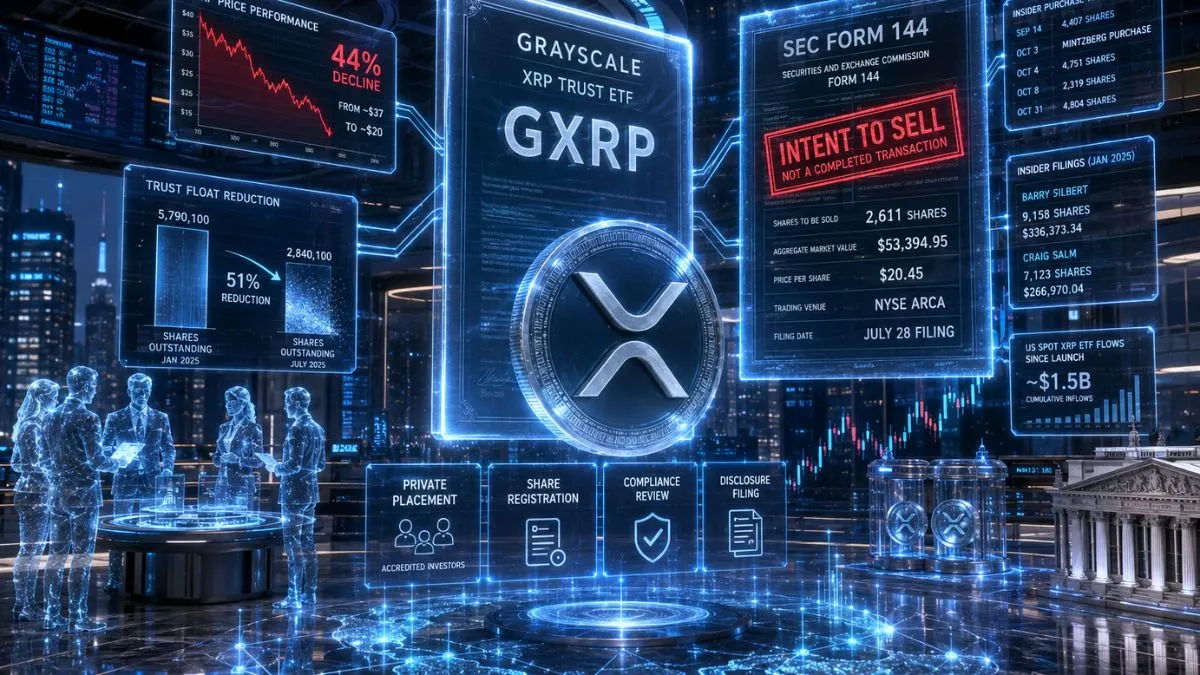
Grayscale CEO Files to Sell Entire Pre-Conversion XRP Trust Stake as Fund Shrinks 51%
Grayscale CEO Peter Mintzberg files to sell $53K in GXRP shares purchased before the XRP ETF conversion. Analysis of insider transactions, trust performance, and what it signals for the XRP ETF market.
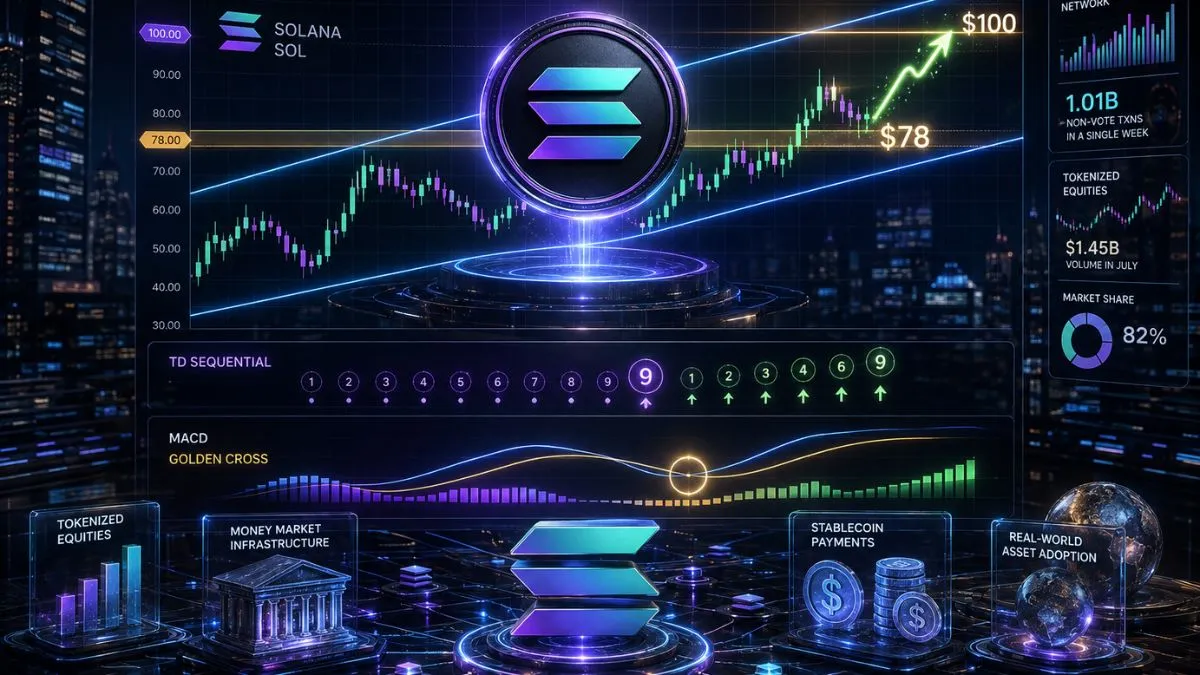
Solana Flashes Three Technical Buy Signals as Traders Eye the $100 Level
Solana (SOL) is flashing three technical signals — a parallel channel breakout setup, a TD Sequential buy signal, and an MACD golden cross — that traders say could open a path toward $100. Here's what's confirmed, what's speculative, and what to watch.

Bitcoin Holds Above $65K as Bitway, WLD and PUMP Lead an Altcoin Sprint
Bitcoin holds above $65K while Bitway (BTW), WLD, and PUMP post double-digit daily gains; a look at the week's volatility and what's driving the altcoin moves.
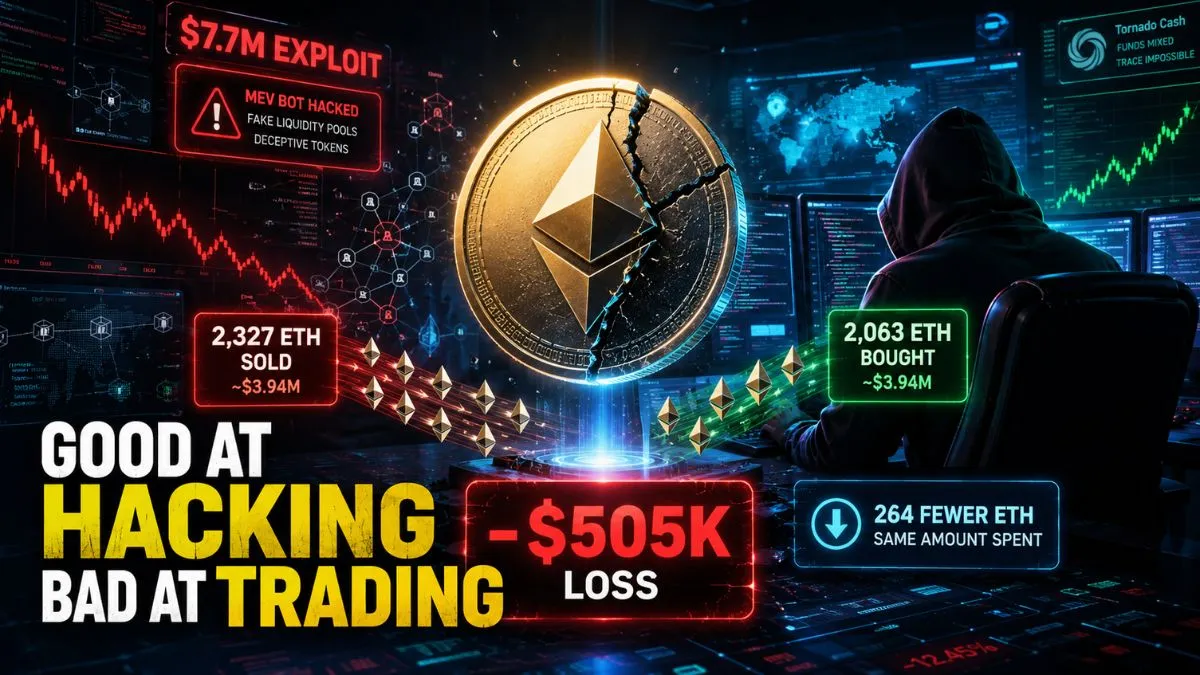
Ethereum MEV-Bot Hacker Turns $7.7M Heist Into a $505K Trading Loss
The hacker behind the $7.7M jaredfromsubway.eth MEV bot exploit sold ETH after the attack, then bought back higher — booking a $505,000 trading loss on top of the stolen funds.