

BlackRock Expands Tokenized Money Market Funds to Europe via JPMorgan Kinexys
World's largest asset manager leverages blockchain infrastructure to offer 24/7 pound, euro, and dollar-denominated tokenized shares targeting institutional demand.

By Jane Doe
Published on Aug 5, 2026
 Cryptorah

Quick Take
- BlackRock will tokenize select European money market fund shares across three currencies (GBP, EUR, USD) using JPMorgan's Kinexys blockchain platform
- Tokens represent shares from BlackRock's Institutional Cash Series, a fund range managing approximately $311 billion collectively
- JPMorgan will provide tokenization infrastructure while continuing as transfer agent; tokens enable round-the-clock transfers between approved digital wallets
- Demand drivers include digital wallet providers, corporate treasurers seeking efficient collateral, and firms exploring intracompany payment solutions
What Happened
BlackRock is launching tokenized versions of select European money market funds through a partnership with JPMorgan's blockchain infrastructure platform, Kinexys. The initiative extends tokenized fund access beyond the U.S. dollar-denominated products previously offered.
According to a Bloomberg report published on Tuesday, the tokenized offering will include pound sterling, euro, and U.S. dollar share classes drawn from BlackRock's Institutional Cash Series. Each token issued will represent a beneficial ownership stake in an underlying money market fund, functioning as a digital certificate that can be transferred between approved digital wallets at any hour of the day or night—significantly different from traditional fund transfer windows.
The operational architecture keeps JPMorgan in a dual role: the bank's Kinexys platform handles the tokenization layer (minting and burning tokens in sync with share creation and redemption), while JPMorgan continues to serve as the official transfer agent for the funds themselves, maintaining regulatory recordkeeping and investor registry functions.
Who's Asking for This
Beccy Milchem, BlackRock's global head of cash distribution and head of international cash management, indicated the product responds to inbound interest from three distinct user groups: digital wallet providers building institutional-grade custody infrastructure, corporate treasury departments seeking more nimble collateral management tools, and capital markets participants who require instantaneous settlement for margin and collateral purposes.
Hannah Winter, BlackRock's head of digital cash, highlighted a specific use case gaining traction: peer-to-peer token transfers for intracompany payments. Multinational corporations often move liquidity between subsidiaries or regional treasury centers, and the ability to effect those transfers outside traditional banking hours and without intermediary correspondent banks offers both speed and cost advantages.
Why It Matters
Strategic Implications
This move signals a continued institutional push to bring traditional financial instruments onto blockchain rails—not as speculative assets, but as operational infrastructure. BlackRock, managing trillions in assets, treating tokenization as a distribution channel rather than an experiment suggests the technology has crossed a maturity threshold for regulated fund products.
Money market funds are the bedrock of short-term corporate and institutional cash management, offering liquidity, principal stability, and modest yield. Tokenizing them addresses a long-standing friction: settlement lag. Traditional money market fund transactions settle on a T+1 or same-day basis during business hours, but redemptions requested after a cutoff time must wait until the next business day. Tokenized shares that transfer on-chain around the clock remove that constraint, which matters acutely in margin calls, collateral top-ups, and cross-border liquidity management.
The multi-currency approach is also notable. Offering GBP and EUR alongside USD acknowledges that European corporate treasurers and institutions operate in those currencies natively and may prefer to hold tokenized cash equivalents in their home currency rather than converting to dollars, avoiding FX risk and conversion costs.
Competitive Positioning
BlackRock is not pioneering tokenized money market funds in isolation. Franklin Templeton launched an on-chain U.S. government money fund in 2021, and other asset managers have announced similar initiatives. By expanding geographically and across multiple currencies, BlackRock is attempting to establish a network effect: the more institutions hold tokenized BlackRock shares, the more valuable peer-to-peer transfer functionality becomes, since both sender and receiver must use compatible token standards and approved wallet infrastructure.
The Numbers
Context on the $311 billion figure: This represents the aggregate assets across BlackRock's broader Institutional Cash Series fund family, not the subset of assets that will be tokenized. The exact size of the tokenized share classes has not been disclosed and will depend on institutional uptake.
BUIDL comparison: BlackRock's USD-denominated institutional liquidity fund, BUIDL, launched in 2024 and has grown to $2.67 billion in tokenized assets according to RWA.xyz, a tracker of real-world asset tokenization. BUIDL offers a U.S.-focused precedent, though its growth trajectory over roughly one to two years suggests meaningful but not explosive early adoption.
Note: The Institutional Cash Series figure represents the entire traditional fund range, not tokenized assets. Chart illustrates scale disparity and BUIDL as the current tokenized benchmark.
Market Context
Tokenization of real-world assets (RWA) has emerged as a practical application of blockchain technology distinct from cryptocurrency speculation. Money market funds, Treasury bonds, and other cash-equivalent instruments are attractive candidates because they are highly standardized, heavily regulated, and their value proposition hinges on liquidity and settlement speed—areas where blockchain offers tangible improvements.
BlackRock's Prior Tokenization Entry
BlackRock entered the tokenized cash management market in 2024 with BUIDL, its U.S. dollar-denominated institutional liquidity fund. BUIDL has since accumulated $2.67 billion in assets, according to RWA.xyz, a real-world asset tracking platform. That growth over approximately one to two years suggests institutional clients are willing to adopt tokenized fund products, though adoption remains a small fraction of BlackRock's overall money market fund assets.
The European expansion via JPMorgan Kinexys represents a geographic and currency broadening of that initial experiment, signaling confidence in both the technology stack and the demand pipeline.
Broader Tokenization Landscape
BlackRock is far from alone. Franklin Templeton, Fidelity, and other asset managers have launched or announced tokenized money market funds. JPMorgan itself has been active in blockchain-based settlement infrastructure, previously piloting JPM Coin for institutional payments and testing repo transactions on private blockchains. Kinexys (formerly known as Onyx Digital Assets) represents JPMorgan's production-grade tokenization platform for third-party issuers.
Central banks in multiple jurisdictions are also exploring or piloting central bank digital currencies (CBDCs), which could eventually interoperate with tokenized private-sector instruments like BlackRock's funds, creating a broader digital liquidity ecosystem.
Technical and Regulatory Context for Non-Specialists
What is tokenization? In this context, tokenization means issuing a digital token on a blockchain that represents legal ownership of a share in a traditional money market fund. The fund itself still holds Treasuries, commercial paper, or other short-term debt; the innovation is in how ownership is recorded and transferred.
Why does 24/7 transfer matter? Traditional fund shares are bought and redeemed through intermediaries (banks, brokers) during business hours. Tokenized shares can move between wallets instantly at any time, which is useful for margin calls, cross-border payments, or treasury operations in different time zones.
Is this the same as cryptocurrency? No. These tokens represent regulated, stable-value fund shares backed by short-term fixed-income securities, not speculative digital currencies. The blockchain is used purely for record-keeping and transfer efficiency.
Who can buy these tokens? The offering is targeting institutional investors—corporations, asset managers, banks—not retail consumers. Access will be through approved digital wallet providers and custodians meeting regulatory and KYC (know-your-customer) standards.
What's Next
The immediate next phase involves onboarding institutional clients and digital wallet providers onto the JPMorgan Kinexys platform. BlackRock will need to coordinate with custodians, prime brokers, and corporate treasury systems to integrate tokenized fund shares into existing cash management workflows.
Key Questions for Adoption
- Interoperability: Will tokenized shares from BlackRock, Franklin Templeton, and other issuers be transferable across platforms, or will each fund family require its own wallet ecosystem? Industry-wide standards will determine whether tokenization creates network effects or fragmented silos.
- Regulatory clarity: European financial regulators will scrutinize how tokenized fund shares fit within existing UCITS (Undertakings for Collective Investment in Transferable Securities) and AIFMD (Alternative Investment Fund Managers Directive) frameworks. Any ambiguity could slow rollout.
- Collateral acceptance: For tokenized shares to function as efficient collateral in derivatives, repo, and securities lending markets, clearinghouses and counterparties must agree to accept them. JPMorgan's involvement as transfer agent may ease this hurdle given the bank's central role in institutional finance.
- Pricing and cost: Will tokenized shares carry the same expense ratios as traditional share classes, or will operational efficiencies allow BlackRock to offer lower fees? Pricing will influence competitive dynamics.
BlackRock executives' specific mention of intracompany payment use cases suggests the firm sees corporate treasurers—not just capital markets participants—as a primary audience. If multinational corporations begin moving significant liquidity through tokenized fund shares rather than traditional bank wires, that could represent a meaningful shift in the plumbing of global corporate finance.
Frequently Asked Questions
How is this different from a stablecoin?
Tokenized money market fund shares represent ownership in a regulated investment fund holding a diversified portfolio of short-term fixed-income securities (Treasury bills, commercial paper, etc.). Stablecoins are typically cryptocurrency tokens pegged 1:1 to fiat currency, backed by reserves held by the stablecoin issuer. Tokenized fund shares fluctuate in value (though very slightly) based on the fund's net asset value, pay dividends, and are subject to mutual fund regulation, while stablecoins aim for a fixed 1:1 peg and operate under differing (and often less clear) regulatory frameworks.
Can individual investors buy these tokenized fund shares?
The offering is targeted at institutional clients—corporations, asset managers, pension funds, and other large investors—through approved digital wallet providers and custodians. Retail access has not been announced and is not typical for institutional share classes, which often carry high minimum investment thresholds and limited distribution channels.
What blockchain is JPMorgan Kinexys built on?
JPMorgan Kinexys operates on a permissioned blockchain infrastructure, meaning access is restricted to approved participants rather than open to the public like Bitcoin or Ethereum. The specific protocol details (whether it's a fork of Ethereum, Hyperledger, or a proprietary chain) have not been disclosed in the available reporting, though JPMorgan has historically used private Ethereum-compatible networks for institutional blockchain projects.
Why would a company choose tokenized shares over a traditional money market fund?
The primary advantages are 24/7 transferability (no waiting for next business day settlement), potential for peer-to-peer transfers between entities without correspondent bank intermediaries, and the ability to use the tokens as instantly movable collateral in capital markets operations. For treasury departments managing liquidity across time zones or needing rapid collateral mobility, these features can reduce operational friction and costs.
How large is the real-world asset tokenization market?
According to RWA.xyz, BlackRock's BUIDL fund holds $2.67 billion in tokenized assets as of the report date. Industry-wide tokenized RWA figures vary by tracker and definition, but tokenized money market funds and Treasury products remain a small fraction of the multi-trillion-dollar money market fund industry overall. Growth is occurring but remains in early-stage adoption among institutional clients.
Sources
- Bloomberg report (Tuesday publication referenced in original content, specific URL not provided in source material)
- RWA.xyz asset tracking data for BlackRock BUIDL fund ($2.67 billion AUM figure)
- Statements from Beccy Milchem, BlackRock global head of cash distribution and head of international cash management
- Statements from Hannah Winter, BlackRock head of digital cash
This article is based on reporting from Cointelegraph and Bloomberg. All figures and quotes are drawn from the original source material. No predictive claims or data points beyond those explicitly provided have been added.
Investment disclaimer: The content reflects the author’s personal views and current market conditions. Please conduct your own research before investing in cryptocurrencies, as neither the author nor the publication is responsible for any financial losses.
Ad Disclosure: This site may feature sponsored content and affiliate links. All advertisements are clearly labeled, and ad partners have no influence over our editorial content.

Related Articles
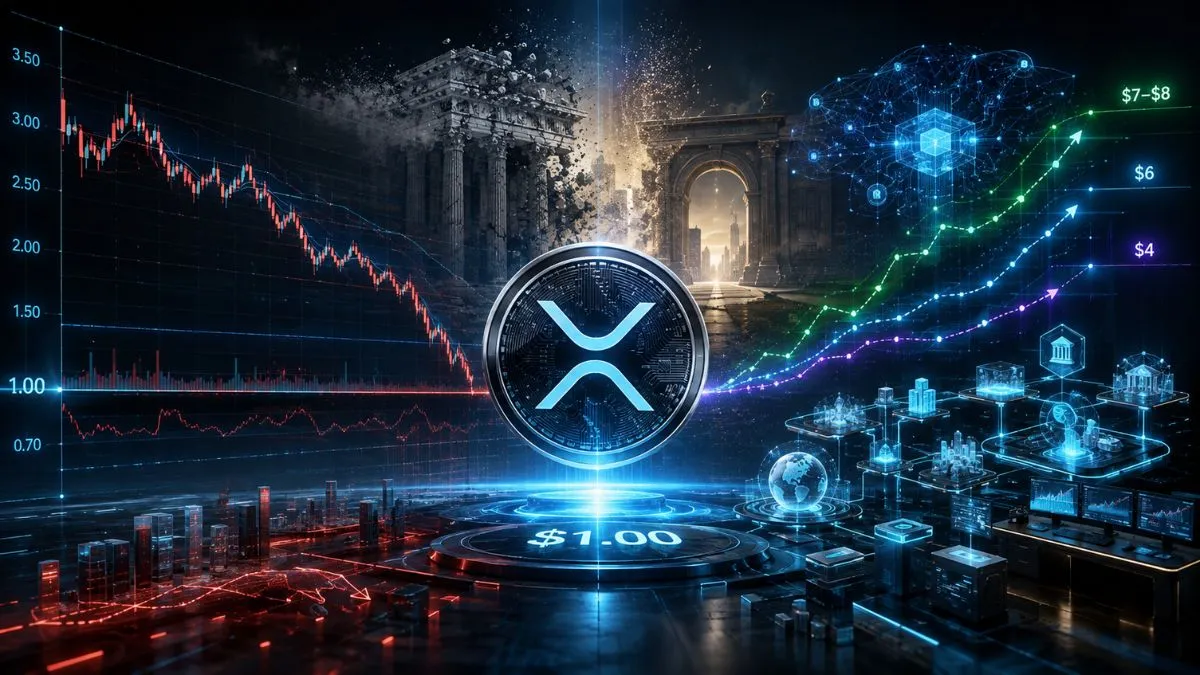
XRP Price Prediction: AI Models See $4-$8 Target as Legal Overhang Lifts
ChatGPT AI predicts XRP could reach $4-$8 by end of 2026 as SEC lawsuit closure removes legal overhang, but current price at $1.02 suggests the harder test lies ahead.

Fireplace Is Extinguished: Prediction Market Terminal Shuts Down 195 Days After Launch
Prediction markets terminal Fireplace is shutting down 195 days after launch, giving users until Sept 30 to withdraw funds — even after raising $1.5M and building for Polymarket and Kalshi.

CLARITY Act Push, Another Strategy Bitcoin Sale, and a Warning About Invisible Quantum Attacks
A recap of today's crypto news: the White House's push to pass the CLARITY Act by September, Strategy's latest Bitcoin sale to fund a stock buyback, and a warning about undetectable quantum-computing attacks on crypto wallets.

Standard Chartered: LINK Could Climb 25x to $200 if Tokenized Assets Hit $4T by 2028
Standard Chartered forecasts LINK could rise 25-fold to $200 by 2030 as tokenized real-world assets scale to $4 trillion, citing Chainlink's dominant oracle market position.