

Bitcoin Drops Below $64K as Korean Markets Crater and U.S. Crypto Bill Stalls
Asia's risk-off shift drags crypto lower while Senate delays CLARITY Act vote, leaving markets watching Fed rate decision and key economic data

By Jane Doe
Published on Jul 28, 2026
 Cryptorah

Quick Take
- Bitcoin fell 2.7% from nearly $65,000 to $63,200 after U.S. markets closed Monday, with broader crypto assets following suit
- South Korea's Kospi index plunged 10% to its lowest level since mid-April, down 25% from mid-June peak on semiconductor stock weakness
- Senate shelved the CLARITY Act to prioritize Russia sanctions, pushing potential crypto legislation vote past next week ahead of August 8 recess
- Fed interest rate decision Wednesday and Core PCE plus GDP data Thursday create high-volatility window for all asset classes
What Happened
Bitcoin came under selling pressure during Asian trading hours Monday night, shedding nearly $1,800 in value as risk sentiment deteriorated across global markets. The cryptocurrency dropped from approximately $65,000 to $63,200—a 2.7% decline—following the close of U.S. equity markets.
The selloff was not isolated to Bitcoin. Major altcoins including Ether, XRP, and Solana all recorded losses as the broader digital asset market absorbed the risk-off momentum originating from Asian equity markets. This downturn ended a period of relative stability Bitcoin had maintained earlier in the day, even as Nvidia shares tumbled on Wall Street.
The cryptocurrency market faced compounding pressure from Washington, where the Senate made the decision to shelve the CLARITY Act—legislation aimed at providing regulatory framework for digital assets—in order to prioritize a Russia sanctions bill. This procedural move makes a vote on the crypto-focused legislation unlikely before next week, with lawmakers facing an August 8 recess deadline that leaves limited legislative days remaining.
Asian equity markets experienced severe declines, led by South Korea's Kospi index which fell 10% to reach its lowest point since mid-April. The benchmark index has now surrendered 25% of its value from the peak it reached in mid-June. Semiconductor giants Samsung and SK Hynix were among the hardest hit, reflecting a broader reassessment of chipmaker valuations across the region.
The Numbers
Why It Matters
Market Implications
The simultaneous pressure from Asian equity weakness and U.S. legislative delays illustrates the dual headwinds facing cryptocurrency markets: traditional risk sentiment contagion and regulatory uncertainty. The timing is particularly significant as it precedes key Federal Reserve and economic data releases that could reshape rate expectations across all asset classes.
The relationship between Bitcoin and traditional equities remains a subject of ongoing analysis. According to Bitfinex analysts, Bitcoin's correlation with equity markets is conditional rather than absolute. The cryptocurrency tends to move in tandem with stocks when macroeconomic stress and interest rate dynamics are the primary drivers. However, when equity market stress originates from sector-specific issues—such as the current debate around semiconductor earnings and capital expenditure—the correlation weakens.
In the current environment, chip sector concerns driving Korean market weakness represent what Bitfinex characterizes as "idiosyncratic" equity stress, suggesting the Bitcoin-equity correlation may be overstated in this particular episode.
The legislative setback adds another dimension of uncertainty. The CLARITY Act has been positioned by proponents as a catalyst that could unlock institutional capital by establishing clearer regulatory parameters for digital asset operations. The delay in bringing it to a vote extends the regulatory ambiguity that many market participants cite as a barrier to broader institutional adoption.
Market Reaction
The selloff in Korean equities was particularly notable given the market's prior strength. According to market commentary from InvestingLive, the Kospi's bull run had been substantially powered by semiconductor stocks, which are now experiencing a reversal in sentiment. The firm noted that "the market is falling out of love with chipmakers at the moment and that's been a big driver of the bull market in South Korea."
This sector rotation away from chip stocks has direct implications for the Korean market given the heavy weighting of Samsung and SK Hynix in the benchmark index. Both companies experienced steep declines in Monday's session, contributing disproportionately to the index's 10% drop.
For Bitcoin, the Asian trading session decline represented a reversal from earlier stability. The cryptocurrency had weathered Monday's U.S. trading session despite sharp losses in Nvidia shares, suggesting some degree of decoupling. However, once Asian markets began their slide, that resilience evaporated.
Understanding Bitcoin-Equity Correlations
Bitcoin's relationship with traditional risk assets is not static. When central bank policy and interest rate expectations are the primary market drivers, Bitcoin typically moves in the same direction as stocks—both are treated as risk assets that benefit from looser monetary conditions. However, when equity market stress comes from company-specific factors (earnings misses, sector rotation, valuation concerns), Bitcoin may decouple because these factors don't directly impact cryptocurrency fundamentals. The current semiconductor sector concerns fall into this second category, which is why analysts note the correlation may be "overstated" in this particular episode.
What's Next
The coming days present multiple high-impact events that could significantly influence both traditional and crypto markets. Wednesday brings the Federal Reserve's interest rate decision, followed immediately Thursday by the release of Core Personal Consumption Expenditures (PCE)—the Fed's preferred inflation measure—and GDP data.
According to Dessislava Ianeva, an analyst at Nexo, these back-to-back releases create "the week's highest-volatility window for U.S. rate repricing." Markets will be parsing the Fed's statement and Chair Jerome Powell's press conference for signals about the future path of monetary policy, while Thursday's economic data will provide updated readings on inflation persistence and economic growth momentum.
Any shift in rate expectations could trigger moves across all rate-sensitive assets, including cryptocurrencies. A more hawkish-than-expected Fed stance or hotter inflation data would likely pressure risk assets, while dovish signals or cooling inflation could provide relief.
On the legislative front, the CLARITY Act's path forward remains uncertain. With the Senate prioritizing Russia sanctions and the August 8 recess approaching, the window for action this session is narrowing. Market participants who had positioned for regulatory clarity in the near term may need to adjust their timelines.
⚠️ What to Watch: Wednesday's Fed decision will include updated economic projections and the Summary of Economic Projections (SEP), which contains the "dot plot" of individual Fed officials' rate forecasts. Any revision to these forecasts could move markets significantly. Thursday's Core PCE reading is particularly important as it will inform whether recent inflation progress is continuing or stalling.
Frequently Asked Questions
Bitcoin declined during Asian trading hours as risk sentiment deteriorated, primarily driven by a 10% plunge in South Korea's Kospi index. Asian equity weakness created risk-off momentum that spilled into cryptocurrency markets, pushing Bitcoin from nearly $65,000 to $63,200.
The CLARITY Act is proposed U.S. legislation aimed at providing regulatory clarity for digital assets. Proponents argue it could unlock institutional investment by establishing clearer legal frameworks for cryptocurrency operations. The Senate has delayed a vote on the bill to prioritize Russia sanctions, pushing any action past next week ahead of the August 8 congressional recess.
No. According to Bitfinex analysts, Bitcoin's correlation with equities is conditional. It tends to track stocks closely when macroeconomic factors and interest rates are the primary market drivers. However, when equity stress is sector-specific—such as the current semiconductor earnings concerns—Bitcoin can decouple because these factors don't directly impact crypto fundamentals.
South Korea's Kospi index dropped 10% to its lowest level since mid-April, with the decline concentrated in semiconductor stocks like Samsung and SK Hynix. The market has fallen 25% from its mid-June peak as investors reassess chipmaker valuations, reversing what had been a major driver of the Korean bull market.
The Federal Reserve's Wednesday decision, followed by Thursday's Core PCE inflation data and GDP release, represents the week's highest-volatility period for rate-sensitive assets including cryptocurrencies. Hawkish Fed signals or hot inflation data could pressure crypto prices, while dovish guidance or cooling inflation might provide support. The Fed's updated economic projections will be closely watched for shifts in the expected rate path.
Source Notes
This analysis is based on reporting that includes market price data, legislative developments, and analyst commentary from Bitfinex and Nexo as of the specified date. All figures, quotes, and developments are drawn directly from the source material. Market prices and conditions are as reported for the specified timeframe and may have changed subsequently.
Investment disclaimer: The content reflects the author’s personal views and current market conditions. Please conduct your own research before investing in cryptocurrencies, as neither the author nor the publication is responsible for any financial losses.
Ad Disclosure: This site may feature sponsored content and affiliate links. All advertisements are clearly labeled, and ad partners have no influence over our editorial content.

Related Articles

Grayscale CEO Files to Sell Entire Pre-Conversion XRP Trust Stake as Fund Shrinks 51%
Grayscale CEO Peter Mintzberg files to sell $53K in GXRP shares purchased before the XRP ETF conversion. Analysis of insider transactions, trust performance, and what it signals for the XRP ETF market.
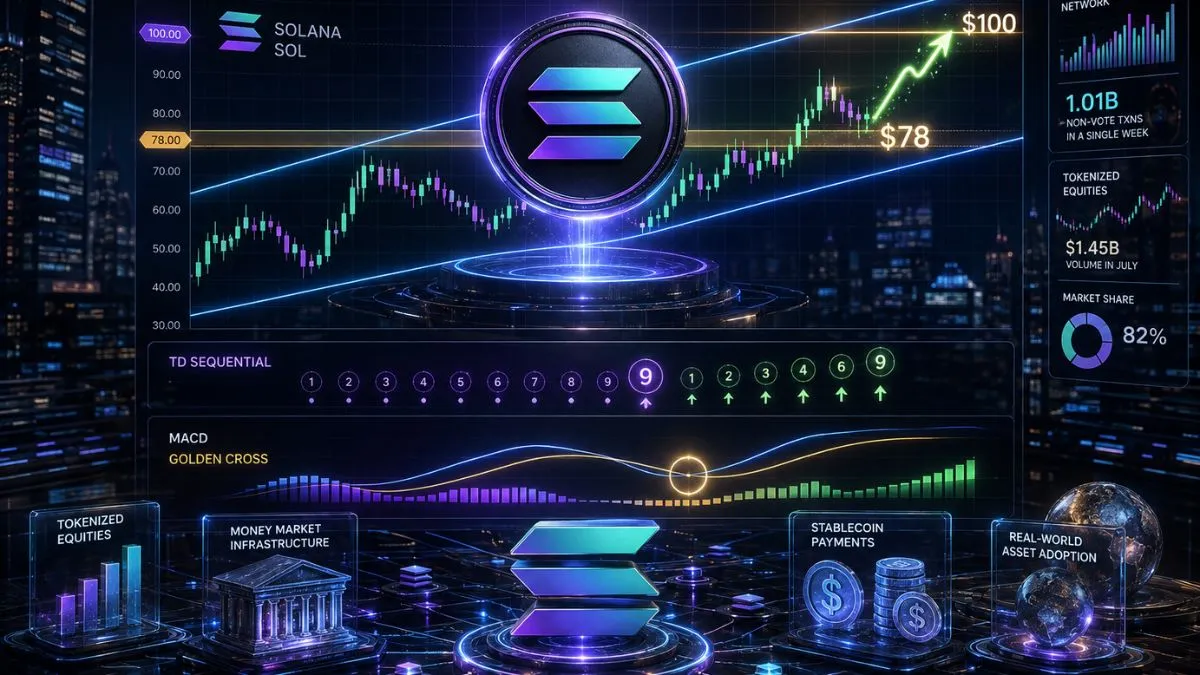
Solana Flashes Three Technical Buy Signals as Traders Eye the $100 Level
Solana (SOL) is flashing three technical signals — a parallel channel breakout setup, a TD Sequential buy signal, and an MACD golden cross — that traders say could open a path toward $100. Here's what's confirmed, what's speculative, and what to watch.

Bitcoin Holds Above $65K as Bitway, WLD and PUMP Lead an Altcoin Sprint
Bitcoin holds above $65K while Bitway (BTW), WLD, and PUMP post double-digit daily gains; a look at the week's volatility and what's driving the altcoin moves.

Ethereum MEV-Bot Hacker Turns $7.7M Heist Into a $505K Trading Loss
The hacker behind the $7.7M jaredfromsubway.eth MEV bot exploit sold ETH after the attack, then bought back higher — booking a $505,000 trading loss on top of the stolen funds.